
 0
0
 0
0
Nigeria’s latest foreign trade data is not merely a statistical release; it is a political document. Between July and September 2025, the country spent over ₦1.4 trillion importing food, according to figures published by the National Bureau of Statistics (NBS). This occurred in the midst of worsening hunger, spiraling food inflation, a weakened naira, and relentless government assurances that food security remains a national priority. The numbers expose those assurances as fiction.
Within just three months, ₦748 billion was spent on prepared foodstuffs, beverages, spirits, and vinegar, while ₦697 billion went into vegetable products. These two categories alone constituted a substantial portion of Nigeria’s total imports for the quarter. Further disaggregation makes the picture even more damning: ₦382 billion on live animals and animal products, and ₦140 billion on animal and vegetable fats and oils. These are basic consumables – items Nigeria has historically produced, has the land and labour to produce, and desperately needs to produce to stabilise prices and rural livelihoods.
This import dependence is not an accident of nature. It is the outcome of conscious policy choices. It reflects the quiet burial of agricultural interventions introduced by the previous administration – however imperfect – without any serious replacement strategy. What has taken their place is an import-friendly regime that bleeds scarce foreign exchange, rewards rent-seeking, and hollows out domestic production systems. No country battling hunger should be importing food on this scale. No country facing a foreign exchange crisis should tolerate it. Yet Nigeria does both – simultaneously and unapologetically.
But the food import scandal is only one half of a more troubling national design.
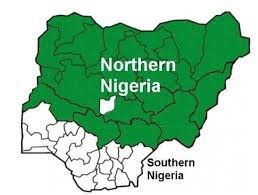
The other half is industrial geography – and it is here that the federal government’s decision to establish an $800 million gold refinery in Lagos must be confronted honestly. This is not a neutral infrastructural choice. It is a profoundly political act with far-reaching economic consequences, particularly for Northern Nigeria.
Nigeria’s commercially viable gold deposits are overwhelmingly concentrated in the north-west axis, especially Zamfara State, with extensions into Kebbi, Katsina, Kaduna, and Niger States. Artisanal and small-scale mining has flourished there for decades, often informally, sometimes dangerously, but always with enormous latent value. Logic, efficiency, and basic development economics would suggest that value-adding infrastructure – refineries, processing hubs, industrial clusters – should be located close to the source of raw materials. This is how jobs are created, skills transferred, ancillary industries developed, and regions lifted out of poverty.
Nigeria has chosen the opposite.
By siting a gold refinery nearly a thousand kilometres away from the gold belt, the federal government has entrenched a familiar and deeply offensive pattern: the systematic extraction of northern resources for southern accumulation. Raw materials will flow south. Capital, skilled jobs, infrastructure, and profits will remain there. The North will be left, once again, with pits in the ground, polluted communities, informal labour, and insecurity.
This is not new. It is colonial economics, repackaged.
Under British rule, Northern Nigeria functioned primarily as a supplier of raw materials and agricultural produce, while processing, trade, and capital formation occurred elsewhere – often offshore. What we are witnessing today is a post-colonial revival of the same model, with Abuja replacing London and Lagos assuming the role of the imperial entrepôt. The North is once again being positioned as a hinterland – useful only for what can be extracted from it.
When viewed alongside the explosion in food imports, the pattern becomes unmistakable. Northern Nigeria, which holds the bulk of the country’s arable land and agricultural labour force, is being undermined as a food-producing region through neglect, insecurity, and policy abandonment. At the same time, its mineral wealth is being centralised and processed elsewhere. The result is economic asphyxiation masquerading as national development.
These outcomes are not incidental. They flow from a governing philosophy that is deeply hostile to balanced development, suspicious of regional self-sufficiency, and comfortable with spatial inequality so long as it aligns with entrenched centres of power. This philosophy prioritises ports over farms, imports over production, and centralisation over federation. It explains why food is imported instead of grown, why gold is refined far from its source, and why entire regions are locked out of industrial value chains.
The consequences are already visible. Youth unemployment deepens in the North. Rural economies collapse. Insecurity feeds on economic despair. Meanwhile, pressure mounts on foreign reserves, inflation erodes purchasing power, and national cohesion frays under the weight of perceived injustice.
No serious federation behaves this way. No rational economy designs itself against its own geography. And no country that treats one region as expendable can sustain political stability indefinitely.
Nigeria today is not merely suffering from poor policy; it is experiencing a deliberate restructuring of its political economy, one that concentrates value, opportunity, and power while dispersing poverty, risk, and resentment. Until this extractive order is dismantled – until food is grown where it can be grown, minerals processed where they are found, and development consciously decentralised – Nigeria will continue to slide toward economic fragility and national disunity.
The question is no longer whether these policies are failing. The question is who they are designed to serve – and who they are meant to sacrifice.


